The Social Impact of the Arts an Intellectual History
Ben Goldacre, who writes the excellent Bad Scientific discipline cavalcade, sells T-shirts on his site with the slogan "I think you'll find it's a fleck more than complicated than that". I'm oft reminded of Goldacre'southward caveat by electric current debates around the value and purpose of the arts in which there is a tendency to simplify, even to caricature, highly complex ideas. An obvious example is the polarisation of ideas between the and so-called 'instrumental' and 'intrinsic' value of art. Commentators rarely even recognise the disputed understandings of what fine art is, still less the ideological basis of those understandings. It is indeed a bit more complicated. Eleonora Belfiore and Oliver Bennett enter these debates with the aim of challenging simplification and reconnecting contemporary policy positions with the long tradition of European thought they actually depend on. So, on the issue of instrumentalism, they reasonably detect that it "is, every bit a thing of fact, 2,500 years quondam rather than a degeneration brought about by contemporary funding regimes". In their long perspective, it is the aestheticism of art for fine art's sake that is a novel intellectual position.
The authors survey a vast field with indistinct boundaries – Western philosophy of art (using the term loosely) since Classical Greece. Though they are necessarily selective, one tin can only be impressed by the latitude and depth of their reading. They describe on the work of well-known thinkers such as Plato, Aristotle, Horace, Rousseau and Kant and obscure ones such as Tatian, Dacier, Piccolomini and Breuer. Among artists, information technology is writers whose ideas are mentioned most often: Flaubert, Arnold, Tolstoy, Hemingway and Kipling all appear. The issue is both a literature review and an anthology of fundamental texts. The citations often take equally much space as the give-and-take they receive, but information technology is valuable to take so many of import selections gathered in one identify.
Eleonora Belfiore and Oliver Bennett
Palgrave Macmillan
ISBN: 978 0 230 57255 three Buy from the AP Bookstore on our website www.artsprofessional.co.uk
The authors give much attending to the methodological challenges of writing intellectual history, discussing the issues of interpreting past cultures through contemporary ideas, of Eurocentrism and of rationales for classifying civilisation. They deal well and clearly with some philosophically subtle issues, such as the nature of cognition and in what ways art that is invented can meaningfully be considered to offering truth, if at all. The cadre of the book considers eight categories of claims for the impact of the arts that the authors identify in the literature of the past two and a one-half millennia. These range from catharsis, teaching and moral comeback to its utilize in politics and the construction of identity. Their approach is even-handed, and they highlight important arguments for the negative effects of the arts first expressed by Plato but non much considered today outside the domain of pop culture where, for instance, film censorship is a direct descendant.
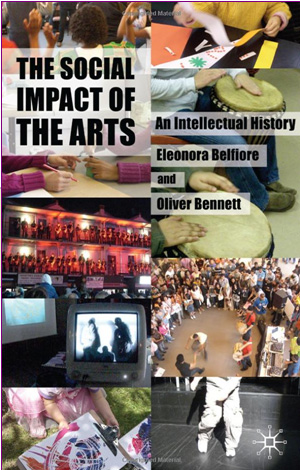
Reading such a range of diverse claims about the power and function of the arts prompts questions about the basis on which most of them are made. In the centuries before social enquiry, on what foundations did Rousseau or Schopenhauer build their theories? How did Arnold propose to determine "the all-time which has been thought and said in the earth"? It is often unclear whether some of these thinkers, still brilliant, are doing more than seeking to universalise personal feel. Hegemony develops when the powerful succeed in establishing their values, as natural and cultural history can be seen as a struggle between normalising and resisting ideologies. While the authors can hardly be reproached for omissions in a projection of this scale, a discussion of reception theory – which sees the reader or audience as co-creator of an artwork'south meaning – might accept introduced a different perspective to the claims of value made by artists and their supporters. Although the authors situate their work as a contribution to contemporary cultural policy debates and conclude by hoping that it will "exist seen to have some relevance to the formulation of policies that govern the place of the arts in our public institutions", their book really makes few direct connections with the issues that preoccupy funding bodies or arts organisations. Information technology does not, for instance, consider the difference between experience of the arts as a consumer and a producer, or a patron'due south impact on an creative person's piece of work. The book'south tone suggests that it was written primarily with students in mind and each affiliate ends with a summary of its argument in archetype textbook mode. Arts professionals will discover this an intellectually stimulating read but, despite the somewhat misleading title and a embrace with pictures of fine art workshops, they volition need to look elsewhere for consideration of current policy, evidence or practice. That is not a criticism: this volume has a different purpose. Its great strength is to challenge readers to question their own beliefs and the necessarily ideological construction of debates about art and its value. If they put it down with a sense that things are indeed more complicated than they seemed the book will take done its work. And if, as a upshot, the quality of current soapbox around cultural policy is improved, the authors will deserve much gratitude.
Source: https://www.artsprofessional.co.uk/magazine/195/review/social-impact-arts-intellectual-history
0 Response to "The Social Impact of the Arts an Intellectual History"
Postar um comentário