What was the solution to the Tigris River drying up?
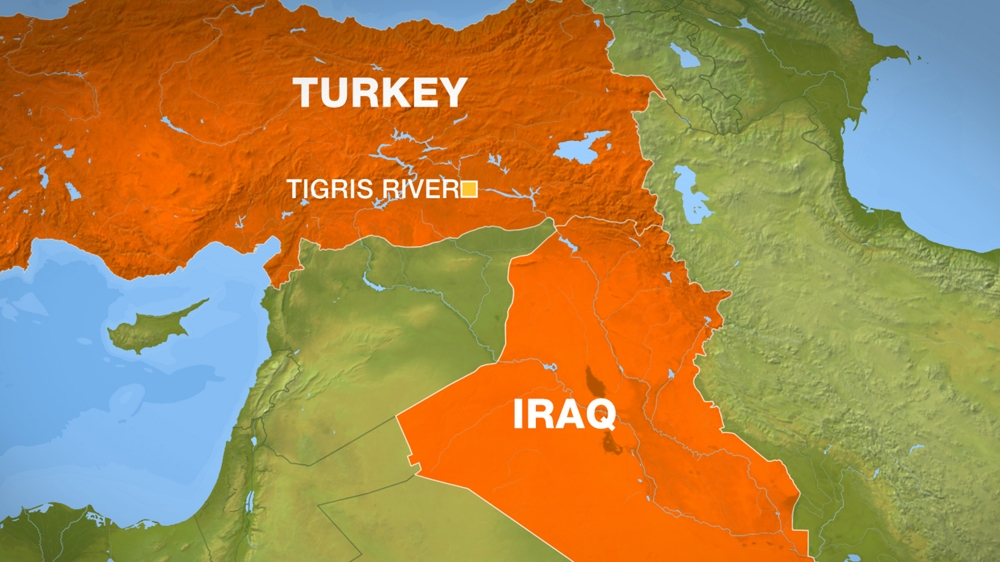
Turkey has decided to postpone filling a massive upstream dam among rising concerns in neighbouring Iraq that declining water levels in the Tigris River may pose an immediate threat to the country's water flow.
At least 70 per centum of Iraq's h2o comes from rivers and marshes shared with its neighbours, especially the Tigris and the Euphrates rivers – both of which run through Turkey.
Ankara started filling the Ilisu Dam – one of 22 dams and xix ability plants being congenital as part of the Southeastern Anatolian Project – on June 1, just on Th it announced that it was halting operations.
"As of this moment, the h2o of the Tigris River volition flow into Iraq without a unmarried drop touching the gates of the Ilisu Dam which we've now opened," said Fatih Yildiz, Turkey'due south ambassador to Iraq.
Speaking at a press conference, Yildiz said: "stability played an of import role in our conclusion to postpone filling the dam."
He added: "Turkey will continue to prove the cooperation and sacrifice needed to aid our Iraqi brothers overcome the water crisis."
'Breaks my heart'
Experts say the amount of water flowing through Iraq'due south rivers has fallen by at least 40 pct in recent decades. On June 3, the Iraqi parliament chosen an emergency session to discuss the land's low h2o levels.
"I can cut across the Tigris River on foot. It breaks my heart to see information technology like this," Fatih al-Salaam, a 25-year-quondam pupil in the majuscule, Baghdad, told Al Jazeera.
"These rivers [the Tigris and Euphrates] shape our identity. It is subsequently them that Iraq was chosen the land between the two rivers," added al-Salaam.
A prolonged reduction of water levels in the rivers flowing through Republic of iraq volition reduce electricity generation from hydroelectric dams and touch on the h2o supply for agriculture, forcing the country to import more than food.
The shortages could also affect Iraq'southward southern marshes, which were declared a UNESCO earth heritage site in 2016.
These rivers shape our identity. Information technology is after them that Iraq was called the land between the 2 rivers
Anger at Iraqi authorities
While some take pointed fingers at Turkey for the h2o shortages in Iraq, including social media activists calling for a cold-shoulder of Turkish products, many citizens and politicians take held Baghdad responsible.
"Why are we putting the arraign on Turkey? Why didn't Iraq build a dam of its ain?" Malik Rashid, a 30-year-old resident of Nasiriya in southern Iraq, told Al Jazeera.
"We blame our own government for non properly managing and using our water resources."
Omar Hashim, 38, from Baghdad, agreed: "More responsibility falls on shoulders of the Iraqi government. Nosotros can only arraign information technology [Baghdad], non Turkey, for not knowing how to plan our water security."
Capitalising on popular sentiment, Muqtada al-Sadr, the Shia leader of the Sairoon bloc that emerged victorious in last month's parliamentary elections, gave the government a deadline to begin solving the water crisis.
"If our [electoral] victory is the first of revenge for the citizens of Iraq, so I will not allow that to happen," al-Sadr said in a argument on Lord's day, adding that his party volition "piece of work to restore the rights" of the public.
Meanwhile, Iraq's Prime Minister Haider al-Abadi has gone to nifty lengths to testify his approachable regime did everything it could to tackle the issue.
"There are plans to secure our water resources on both the domestic and foreign fronts. Yes, there is a water shortage this year, but it is not a crisis," he said at a news conference on Tuesday.
![Al-Abadi has said there are plans to secure the country's water resources [Khalid al-Mousily/Reuters]](https://www.aljazeera.com/wp-content/uploads/2018/06/b8ace584a7fd436a9f84eee5f01c8ae7_18.jpeg)
Farming affect?
Local media has reported that al-Abadi's government was taken by surprise at the depleting h2o levels, but officials told Al Jazeera that Baghdad and Ankara have been in continuous contact over the upshot.
"We haven't taken a single footstep without consulting the Iraqis," Yildiz, the Turkish ambassador, told Al Jazeera, adding that Ankara had already postponed a planned March start for the project.
"[The] depression water levels are not the result of the dam," said Yildiz, adding that the 2 countries will monitor and evaluate the effects of the dam on Republic of iraq's water supply.
Zafer Abdullah, an adviser at the Iraqi ministry of water resources, said climatic change and irregular rainfall was to blame for the reduced water menstruation.
"The storage of water in Ilisu [last week] surely hasn't had the chance to bear upon water levels so quickly," he said.
"It would in the long run, merely we are seeing these furnishings considering of climatic conditions and the lack of rainfall."
Despite agreeing to the construction of the dam, Baghdad fears that the book of water being withheld will impact farming.
"Drinking water volition not be affected past the dam, just when it comes to agronomical needs, we are worried," Ahmed Mahjoub, spokesman for the Iraqi strange ministry building, told Al Jazeera.
"Turkey promised its dam will not harm Iraq [and its] agricultural needs in fundamental and southern provinces, but we recollect the volume of water released should increase. We are trying to negotiate a better deal," added Mahjoub.
Rivers from Iran
Although public attention has focused on Turkey'southward Ilisu dam, residents in Sulaimaniyah in Republic of iraq's Kurdish region have reportedly been struggling to access water for several days after Iran cut off the menstruation of water in one of the major tributaries of the Tigris River.
The Kurdistan Regional Government (KRG) said in a statement this calendar week that Iran "cutting the water flow of a cross-edge river of Little Zab", resulting in a shortage of drinking water for the residents of Qaladze.
"The situation is very bad," Akram Ahmed, full general manager of dams in the KRG'southward Ministry of Agriculture and Water Resources told Al Jazeera. "Thousands of people can't access water for more than half an hour a solar day. Information technology is an environmental and humanitarian disaster."
A commission from the Sulaimaniyah provincial council and Iran'due south consulate in Sulaimaniyah visited the area near Piddling Zab River on Tuesday to talk over the affair. The meeting was non very successful, said Ahmed.
Mohamed Ansari Fard, an adviser at the Iranian Ministry building of Agriculture, denied that Tehran had cut water flow.
"The shortages [in Sulaimaniya] are a result of drought and climate change. Water shortages are a regional outcome nosotros are addressing in Iran too," said Fard, adding that Iranian farmers had also been protesting against water shortages recently.
Mahjoub, of the Iraqi foreign ministry, said Islamic republic of iran had cut off or diverted 42 rivers and tributaries shared with Republic of iraq, but added that "dealing with the Ilisu Dam is more urgent".
"Iranian and Turkish water storage projects are harming h2o levels in Republic of iraq, but it [shallow waters in the Tigris] has had a huge physical and psychological impact on Iraqis," said Mahjoub.
Source: https://www.aljazeera.com/news/2018/6/9/declining-levels-in-iraqs-tigris-raise-fear-of-water-crisis
0 Response to "What was the solution to the Tigris River drying up?"
Postar um comentário